Echoes of Trauma: DSA-Guided Coil Embolization for Carotid Cavernous Fistula Presenting with Ocular Bruit and Pulsatile Exophthalmos
DISCOVERIES (ISSN 2359-7232), 2025, volume 13, issue 1
ORIGINAL ARTICLE - Case Report
FULL text (PDF)
CITATION: Ekvtimishvili E, Meher A, Johnson J. Echoes of Trauma: DSA-Guided Coil Embolization for Carotid Cavernous Fistula Presenting with Ocular Bruit & Pulsatile Exophthalmos. Discoveries 2025, 13(1): e203. DOI: 10.15190/d.2025.2
Echoes of Trauma: DSA-Guided Coil Embolization for Carotid Cavernous Fistula Presenting with Ocular Bruit and Pulsatile Exophthalmos
Erekle Ekvtimishvili 1, Arpita Meher 2, *, Jessen Johnson 2
- 1 MD, PhD, Assistant Professor at TSMU, Head of Endovascular Neurosurgery Department, High Technology Medical Center, University Clinic, Tbilisi, Georgia
- 2 Department of Medicine, Tbilisi State Medical University, Tbilisi, Georgia
* Corresponding author: Arpita Meher, Department of Medicine, Tbilisi State Medical University, Tbilisi, Georgia; Email: meher.arpita65@gmail.com
Abstract
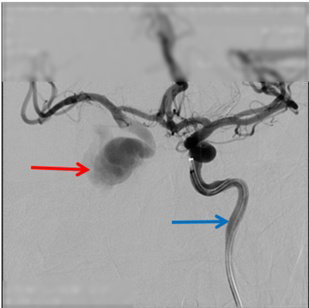
Carotid-Cavernous Fistulas (CCFs) are abnormal arteriovenous connections between the carotid artery and the cavernous sinus, resulting from trauma. This case report presents a 47-year-old male who developed a CCF following a road traffic accident. The patient exhibited symptoms such as pulsatile exophthalmos and an ocular bruit, characteristic of CCFs. Diagnosis was confirmed through Digital Subtraction Angiography (DSA), revealed the origin of the fistula. The patient was treated using a novel combined approach of microsurgery and endovascular intervention, involving ligation of the internal carotid artery and transarterial coil embolization. The treatment resulted in rapid resolution of symptoms, including the pulsatile exophthalmos and ocular bruit. This case highlights the importance of a multidisciplinary approach, blending microsurgical and advanced endovascular techniques, in effectively managing traumatic CCFs. The study underscores the value of early diagnosis and the evolving role of minimally invasive procedures in improving patient outcomes.