Acetazolamide Use in the Management of Refractory Acute Decompensated Heart Failure in the ICU
DISCOVERIES (ISSN 2359-7232), 2026, Volume 14, Issue 1
ORIGINAL ARTICLE - CASE REPORT
FULL text (PDF)
CITATION: Ayyazuddin M, Mendoza A, Patel V, Khan RS, Shah R. Acetazolamide Use in the Management of Refractory Acute Decompensated Heart Failure in the ICU. Discoveries 2026; Jan-Mar, 14(1):e223. DOI: 10.15190/d.2026.2
Acetazolamide Use in the Management of Refractory Acute Decompensated Heart Failure in the ICU
Meher Ayyazuddin¹,*, Adelyn Mendoza¹, Vismay Patel¹, Rubba Shoukat Khan¹, Rehan Shah¹
- 1 Department of Internal Medicine, Hudson Regional Health Bayonne University Hospital, Bayonne, NJ, USA
* Corresponding authors: Meher Ayyazuddin, MD; Department of Internal Medicine, Hudson Regional Health Bayonne University Hospital, 29 E 29 St Bayonne NJ 07002, USA; Email: meherayyaz@gmail.com
Abstract
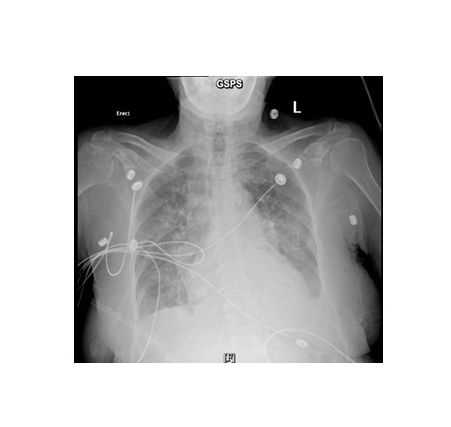
Diuretic resistance is a major therapeutic challenge in acute decompensated heart failure (ADHF). Acetazolamide, a carbonic anhydrase inhibitor, has emerged as a potential adjunct to conventional loop diuretics, as demonstrated in the ADVOR trial. We present a 74-year-old woman with acute coronary syndrome complicated by cardiogenic shock and refractory pulmonary edema despite inotropic support and guideline-directed therapy. The patient received intravenous acetazolamide 500 mg daily for three days, resulting in marked diuresis and radiographic resolution of pulmonary edema within 72 hours. The patient improved clinically. This case supports the potential utility of acetazolamide as an adjunctive strategy for overcoming diuretic resistance in ADHF.