IgG4-Related Disease: Endocrine Involvement, Clinical Implications, and Management Strategies
DISCOVERIES (ISSN 2359-7232), 2025, volume 13
ORIGINAL ARTICLE
FULL text (PDF)
CITATION: Mohamed MA, Hammoud A, Jaber HM, Shaban LN, Shaqra LA, Nazzal LA, Haddadin DE, Haddadin FE, Alaqtash NM, Ahmed LEM, Sujith A. IgG4-Related Disease: Endocrine Involvement, Clinical Implications, and Management Strategies. Discoveries 2025: 13(4): e219. DOI: 10.15190/d.2025.18
IgG4-Related Disease: Endocrine Involvement, Clinical Implications, and Management Strategies
Mohamed Ahmed Mohamed1, Ahmad Hammoud2,*, Hadil Maher Jaber2, Leen Nasser Shaban2, Leen Abu Shaqra2, Lara Ahmad Nazzal2, Dyala Essam Haddadin2, Farah Essam Haddadin2, Nader Mohammad Alaqtash2, Leena ElNaim MohamedAli Ahmed3, Avantika Sujith4
- 1 Medeor hospital, Abu Dhabi, United Arab Emirates
- 2 Ilia State University, Tbilisi, Georgia
- 3 European University, Tbilisi, Georgia
- 4 University of Georgia, Tbilisi, Georgia
* Corresponding authors: Ahmad Hammoud, Ilia State University, 3-5, K. Cholokashvili Ave, Tbilisi, Georgia; Tel: +995599890174; Email: ahmadhammoud266@gmail.com.
Abstract
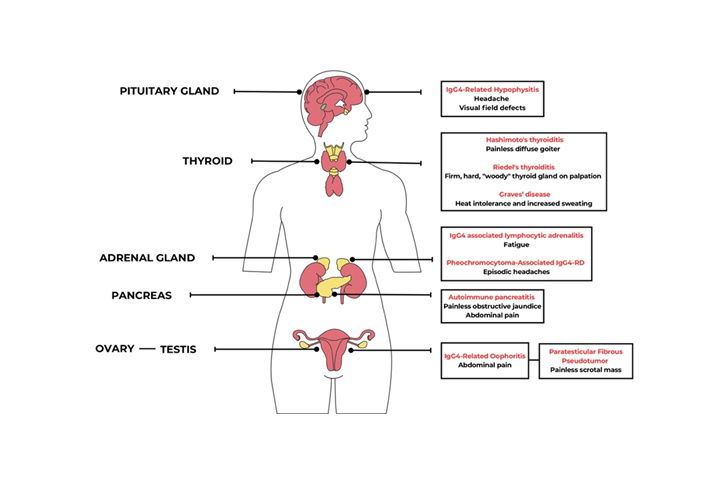
gG4-related disease is a systemic fibroinflammatory disorder characterized by its tumefactive lesions, elevated serum IgG4 levels, and unique histological findings such as lymphoplasmacytic infiltrates in a storiform pattern. It affects a wide variety of organ systems however, endocrinological manifestations remain uncommon and underdiagnosed due to nonspecific presentations. The thyroid and pituitary glands are the most commonly affected endocrinological organs, with the thyroid presenting as Riedel’s thyroiditis or IgG4-related thyroiditis, and the pituitary involvement as hypophysitis. Symptoms could arise either due to direct organ infiltration or a decrease in hormone production and release. Diagnosing IgG4-related disease depends on serological, radiological, and histopathological findings. While immunosuppressive and biological agents are used for more severe or refractory cases, corticosteroids are the mainstay of treatment considering the autoimmune etiology of this disease. Early recognition of endocrinological involvement in IgG4-related disease is imperative for treating and preventing eventual irreversible glandular damage, highlighting the need for increased clinical awareness and multidisciplinary approaches amongst physicians. This review focuses on the endocrinological manifestations, clinical implications, and management strategies of IgG4-related disease.